
Positive Ageing: a scientific approach
An international and multidisciplinary reflection.
A multidisciplinary and international expert group (MIPAG) was formed in January 2024, composed of European experts in geriatrics, nutrition, integrative medicine, neurology, physiotherapy, psychiatry and rehabilitation, in order to define the concept of Positive Ageing.
Professor Yves Henrotin
Doctor of Physiotherapy and Functional Rehabilitation, Osteoarthritis Expert
Biography
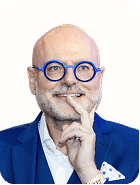
Professor Yves Henrotin
Belgian, based in Liège
Doctor of Physiotherapy and Functional Rehabilitation, Osteoarthritis Expert
Professor Yves Henrotin
Doctor of Physiotherapy and Functional Rehabilitation, Osteoarthritis Expert
Belgian, based in Liège
Research and Publication Experience:
> 300 scientific articles | Member of several editorial boards (Osteoarthritis and Cartilage, International Journal of Orthopaedics…)
Clinical Practice Experience:
+30 years as a professor at the University of Liège and as a clinician at Princess Paola Hospital (Vivalia)
Current Work Locations:
University of Liège (Professor and Director of the Innovative Musculoskeletal Research Laboratory, mSKIL)
Princess Paola Hospital, Marche-en-Famenne (Head of the Physiotherapy and Rehabilitation Department)
Learned Societies:
Vice-President of the Spine and Osteoarthritis Sections of the French Society of Rheumatology.
Vice-President of the Belgian Scientific Society of Physiotherapy.
Vice-President of the Federal Council of Physiotherapy of the Belgian Ministry of Health.
Chair of the Regulatory and Industry Liaison Committee and member of the General Council of the ICRS (International Cartilage Regeneration & Joint Preservation Society).
National Ambassador of OARSI.
Dr. Sofia Duque
Internal Medicine Physician, Expert in Geriatrics and Nutrition for the Elderly
Biography

Dr. Sofia Duque
Portuguese, based in Lisbon
Internal Medicine Physician, Expert in Geriatrics and Nutrition for the Elderly
Dr. Sofia Duque
Internal Medicine Physician, Expert in Geriatrics and Nutrition for the Elderly
Portuguese, based in Lisbon
Research and Publication Experience:
>40 scientific articles
Her main areas of clinical research are geriatric assessment, nutritional assessment, delirium, and predictors of clinical outcomes in elderly patients.
She participated in the development of national clinical guidelines for the care of the elderly (and received a national award in 2015 for her work).
Clinical Practice Experience:
+10 years as a specialist in internal medicine and geriatrics
Current Work Locations:
São Francisco Xavier Hospital (Lisbon)
University of Lisbon, Faculty of Medicine (Lisbon)
Learned Societies:
Director of Communications and Website for the European Society of Geriatric Medicine (EuGMS)
Secretary of the Geriatrics Study Group of the Portuguese Society of Internal Medicine
Prof. Demirhan Diracoglu
Physical Medicine and Rehabilitation (PMR) Therapist, Expert in Manual and Musculoskeletal Medicine
Biography
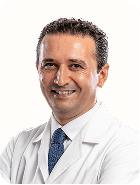
Prof. Demirhan Diracoglu
Turkish, based in Istanbul
Physical Medicine and Rehabilitation (PMR) Therapist, Expert in Manual and Musculoskeletal Medicine
Prof. Demirhan Diracoglu
Physical Medicine and Rehabilitation (PMR) Therapist, Expert in Manual and Musculoskeletal Medicine
Turkish, based in Istanbul
Research and Publication Experience:
> 70 scientific articles in international and national journals
> 70 presentations at international and national conferences
5 participations on editorial boards, including the European Journal of Musculoskeletal Diseases
Clinical Practice Experience:
+ 20 years as a PMR specialist
Current Work Locations:
Istanbul University, Istanbul Faculty of Medicine
Learned Societies:
Vice President of the Turkish Society of PMR, Secretary General of the Turkish Medical Society manual
Member of several international companies (EUROVISCO, Treat to Target International Group…)
Dr. Gianni Franco
Neurologist, Integrative Medicine Expert
Biography
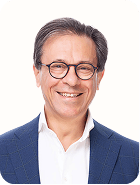
Dr. Gianni Franco
Belgian, based in Dinant
Neurologist, Integrative Medicine Expert
Dr. Gianni Franco
Neurologist, Integrative Medicine Expert
Belgian, based in Dinant
Research and Publication Experience:
Several publications within his association on Parkinson's disease
Clinical Practice Experience:
+30 years as a neurologist
Current Work Locations:
UCL Namur Dinant University Hospital, Head of the Neurology Department
HENALLUX (Haute Ecole de Namur Liège Luxembourg), Professor of Neuropathology
Learned Societies:
Member of the Non-Pharmacological Intervention Society (NPIS)
President of the Belgian Parkinson's Association
President of EplC (Ensemble pour le Cerveau - Together for the Brain), Vice-President of the Belgian Brain Council
Dr. Luis Agüera Ortiz
Psychiatrist, Expert in Psychogeriatrics
Biography
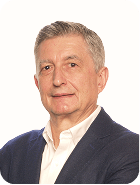
Dr. Luis Agüera Ortiz
Spanish, based in Madrid
Psychiatrist, Expert in Psychogeriatrics
Dr. Luis Agüera Ortiz
Psychiatrist, Expert in Psychogeriatrics
Spanish, based in Madrid
Research and Publication Experience:
> 200 scientific articles
> 300 presentations at national and international conferences
Has participated in numerous clinical trials and research projects, primarily in the fields of depression, psychogeriatrics, and dementia.
He is the editor-in-chief of the journal "Geriatric Psychiatry" published by Elsevier.
Clinical Practice Experience:
+30 years as an adult psychiatrist in the public and private sectors
Current Work Locations:
12 de Octubre University Hospital (Madrid)
Complutense University (Madrid)
Learned Societies:
Former President of the Spanish Society of Psychogeriatrics
Well-ageing: a comprehensive and preventative approach
Ageism remains a reality today, whether internalized or imposed by society.
From a medical perspective, a multidimensional approach that considers all aspects of healthy ageing—physical, cognitive, psycho-emotional, social, and environmental—is still lacking.
Existing initiatives primarily target people aged 60 and over, but taking action from age 45 would be essential for effective prevention.
The goal of MIPAG is to offer an integrative approach to well-ageing, addressing the needs of adults from age 45 onward, through preventive and integrative medicine.
Discover their first article, which defines the concept of Positive Ageing and identifies the barriers and levers for promoting well-ageing.
The stages of the study
Literature Review
Selection of 118 articles published on PubMed (Jan. 2022–Apr. 2024): clinical trials, meta-analyses, randomized controlled trials, and reviews on barriers, facilitators, limitations, and improvements in healthy ageing.
MIPAG Meeting in Paris
Seeking consensus on the main obstacles and facilitators of healthy ageing and research priorities.
Article Writing and Revisions
Exchanges via email and videoconferences among board members and review by peers selected for their expertise.
The concept of Positive Ageing
Positive Ageing involves optimizing intrinsic capacities through proactive and early actions, promoting physical, mental, and emotional well-being. Inspired by the WHO's ICOPE ICOPE is a WHO program for early detection of loss of autonomy in older people and intervention before it takes hold. framework , it is distinguished by its preventive approach and its focus on preparation rather than managing deficits.
-
Motor ability: the physical capacity to produce and control body movements, including strength, balance, mobility, and coordination.
-
Functional capacity: a person's ability to perform essential daily living activities through the interaction between their intrinsic abilities and their environment.
-
Cognitive capacity: the ability to process information, including memory, attention, reasoning, learning, and decision-making.
-
Psychological capacity: the capacity related to mental and emotional well-being, including motivation, mood, stress management, and psychological adaptation.
-
Sensory capacity: the ability to perceive and interpret environmental stimuli, primarily sight, hearing, smell, and olfaction.
Positive Ageing: Challenges, Solutions and Priorities
To understand the challenges and opportunities, MIPAG identified the main obstacles and levers that influence ageing at both an individual and societal level:
70
obstacles
64
facilitators
Societal
- Overall organization of society
- Healthcare system under strain
- Shortage of healthcare professionals
- Inappropriate medical practices
- Social inequalities
- Ageism
- Unequal access to education
- Limited access to digital technology
- ...
- Adapted practices of healthcare professionals
- Effective organization of the healthcare system
- E-health
- AI applied to health
- Prevention policies
- Access to quality food
- ...
Individual
- Social isolation
- Unfavorable urban environment
- Poorly adapted digital environment
- Cultural norms and barriers
- Health problems
- Decline in physical abilities
- Decline in cognitive abilities
- Loneliness
- ...
- Regular physical activity
- Balanced diet
- Good general health
- Physical mobility and agility
- Preserved cognitive abilities
- Emotional balance
- Social support
- Favorable living environment
- ...
Societal
- Overall organization of society
- Healthcare system under strain
- Shortage of healthcare professionals
- Inappropriate medical practices
- Social inequalities
- Ageism
- Unequal access to education
- Limited access to digital technology
- ...
Individual
- Social isolation
- Unfavorable urban environment
- Poorly adapted digital environment
- Cultural norms and barriers
- Health problems
- Decline in physical abilities
- Decline in cognitive abilities
- Loneliness
- ...
Societal
- Adapted practices of healthcare professionals
- Effective organization of the healthcare system
- E-health
- AI applied to health
- Prevention policies
- Access to quality food
- ...
Individual
- Regular physical activity
- Balanced diet
- Good general health
- Physical mobility and agility
- Preserved cognitive abilities
- Emotional balance
- Social support
- Favorable living environment
- ...
Research priorities for developing Positive Ageing
To move forward, MIPAG has defined three priority areas.
-
1
Develop and validate digital tools based on advanced technologies.
-
2
Organize and implement local prevention strategies.
-
3
Improve communication techniques with seniors.
Conclusion: Obstacles and factors contributing to ageing
Based on an exploratory literature review and their experience, in this first article, the experts identified the obstacles and factors promoting healthy ageing, both at the societal and individual levels.
They discussed outstanding issues concerning the management of healthy ageing, based on the World Health Organization (WHO) recommendations for integrated care for older people (ICOPE),
and defined a research program aimed at promoting a positive attitude and dialogue on healthy ageing through a preventive, holistic, interdisciplinary and positive approach.
The Age & Society Observatory
Dive into our study to deconstruct stereotypes and change your perspective on age.
Discover