
Ageing under pressure: myth or reality?
Laboratoires Expanscience is conducting research through its 'Age & Society' Observatory.
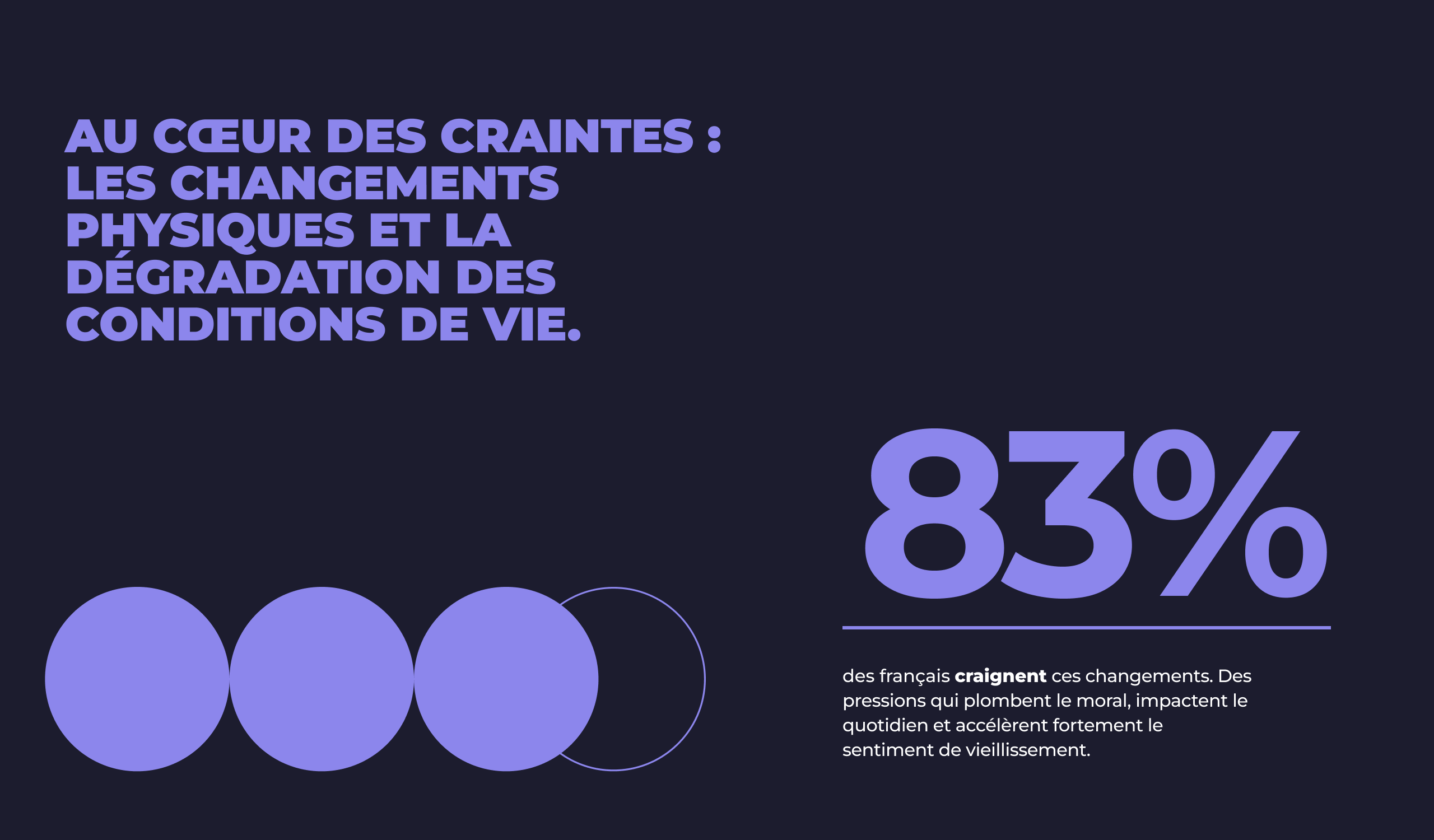
The new study of BVA Xsight for the European 'Age & Society' Observatory revealed that across Europe, 83% of people aged 45 and over have already faced expectations about how they "should" age.
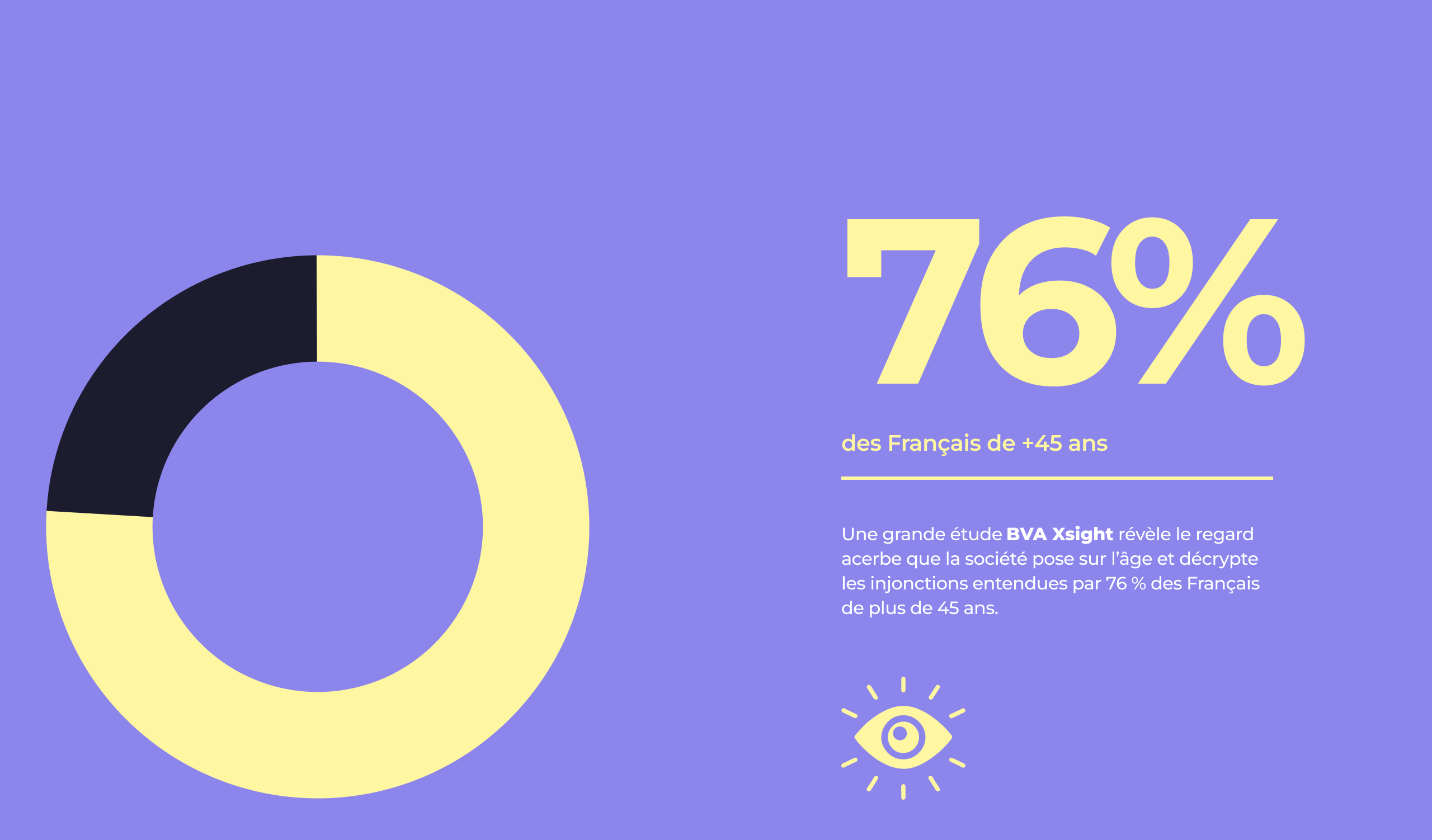
Well-ageing: a matter of freedom in an outdated society
The 2026 Age & Society Observatory explores how these invisible norms create pressure, silence and self‑censorship, particularly from midlife onward.
Across Europe, ageing is not only a biological process.
It is shaped by social expectations, cultural norms and collective representations that influence how people behave, think and feel about getting older.
Age-related diktats: pressure we can't escape
66%
say society sets age-related norms. 48% have already felt the weight of society's expectations and norms. These pressures mainly concern health (70%), followed by appearance (69%) and activities (60%).
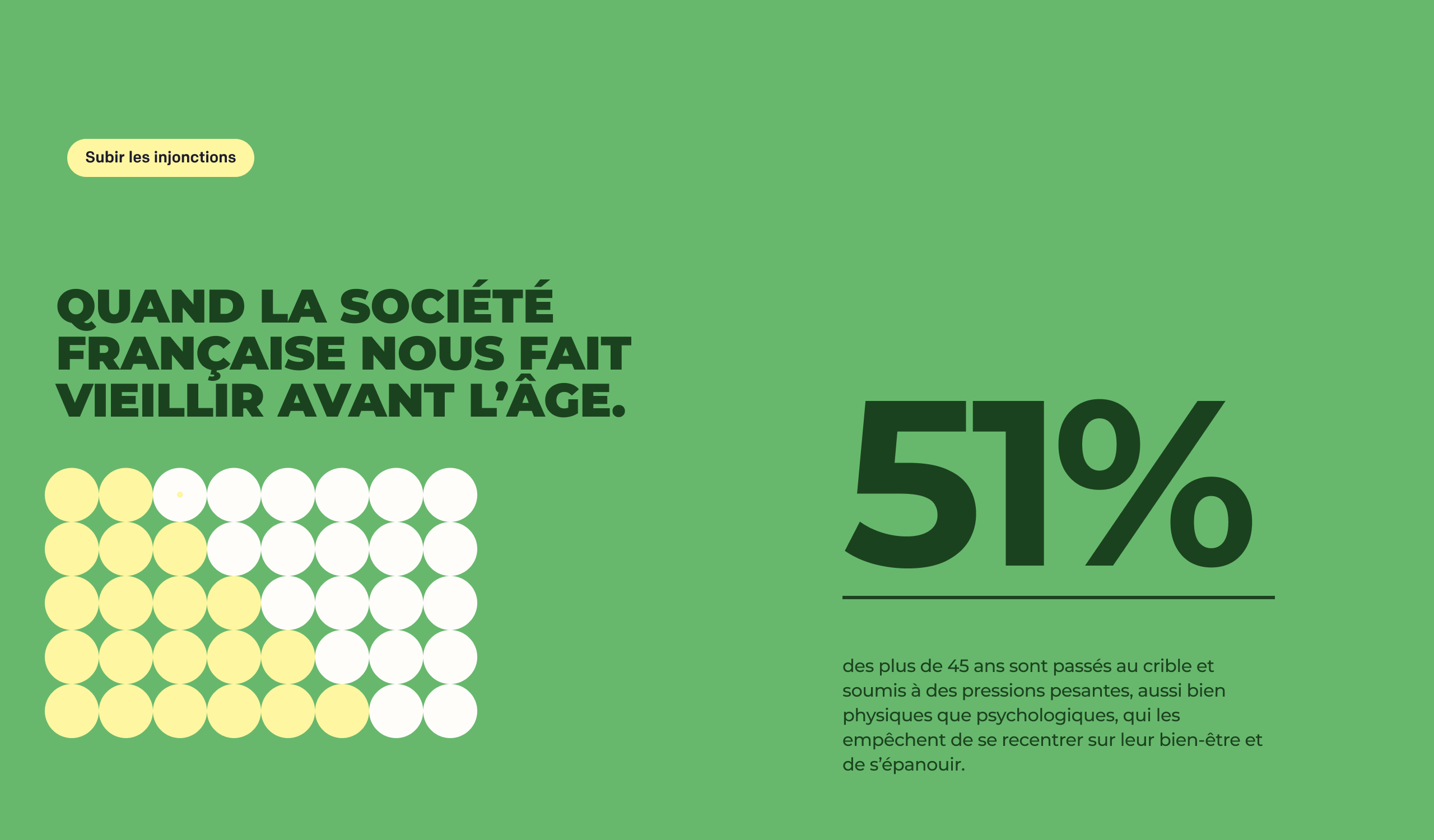
As we get older, expectations multiply: appearance, behavior, lifestyle… all aspects that are heavily shaped by norms that are often implicit.
These demands, repeated day in and day out, contribute to turning ageing into a constrained experience.
Ageing is no longer simply a matter of growing older, but of conforming to social expectations.
Ageing at work: a key turning point
49%
see ageing as a disadvantage at work. This perception directly influences behavior: people anticipate judgments, adjust their behavior, and limit their risk-taking.
The workplace is one of the first places where age-related norms become a reality. Even before any actual discrimination occurs, age becomes a factor in self-censorship that can hinder career advancement.
The silence of individuals: embodying society’s ageing model
In response to these expectations, people adopt subtle coping strategies: changing their behavior, avoiding certain topics, or giving up certain activities.
91% say they feel comfortable talking about ageing but...
64% avoid certain topics to avoid appearing old...
...And55% of people aged 45+ have given up something in their daily lives.
Among them... 24% have already given up wearing certain clothes.
Social pressure gradually becomes self‑imposed limitation.
When internalization of stereotypes produce self-sabotage.
Social pressure acts as an amplifier: it turns natural changes into sources of anxiety.
60%of people believe that ageing is viewed negatively by society and say they are afraid of getting older.
79%fear physical changes and a decline in living conditions.
54YEARS OLD
The age at which society is seen as considering people “getting older” varies sharply across Europe.
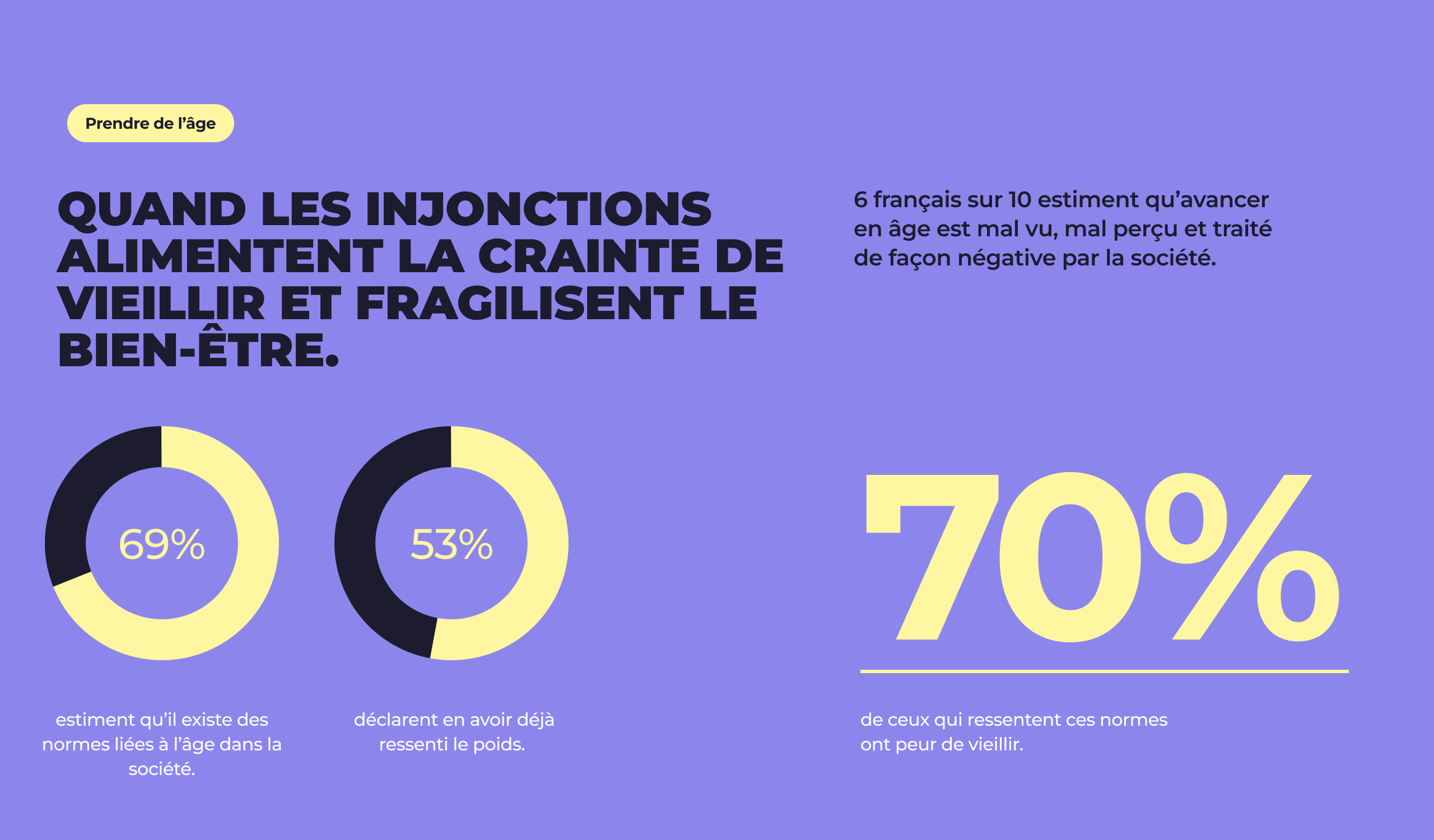
Age-related norms eventually become internalized by individuals themselves and profoundly influence how individuals perceive their own ageing: individuals doubt their abilities, anticipate their decline, and limit their aspirations.
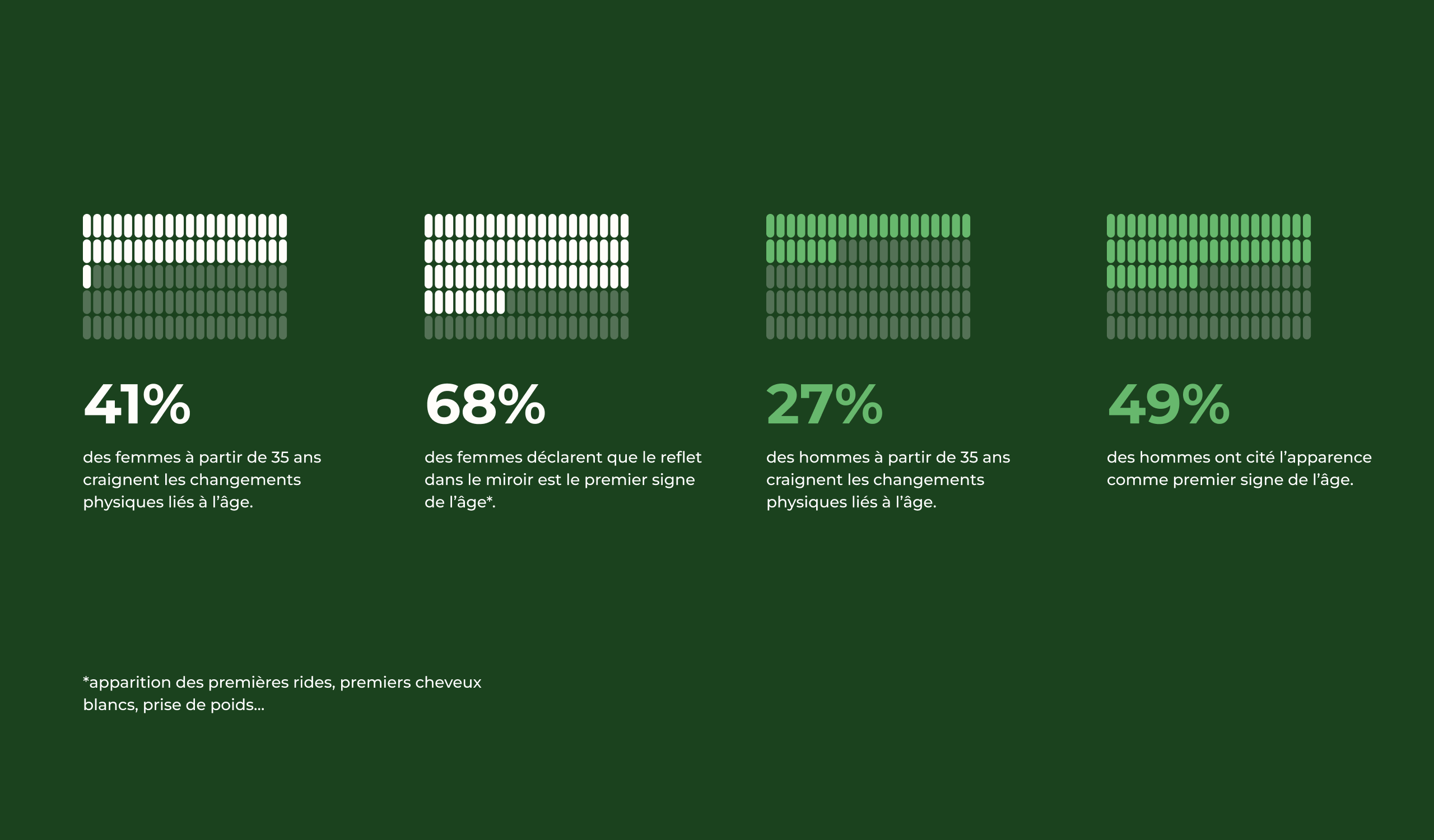
More pressure on women.
Ageing is experienced differently depending on gender.
Social expectations are imposed earlier, are more frequent, and are more demanding for women.
59% of women report feeling more anxious about ageing throughout their lives
51% of women fear potential age-related health issues.
50% of men feel the same anxiety about ageing.
40% of men share this fear of potential health problems.
Breaking free from injunctions: a real aspiration.
Despite this pressure, resistance is emerging. Many individuals express a desire to break free from age norms and reclaim ownership of their ageing journey.
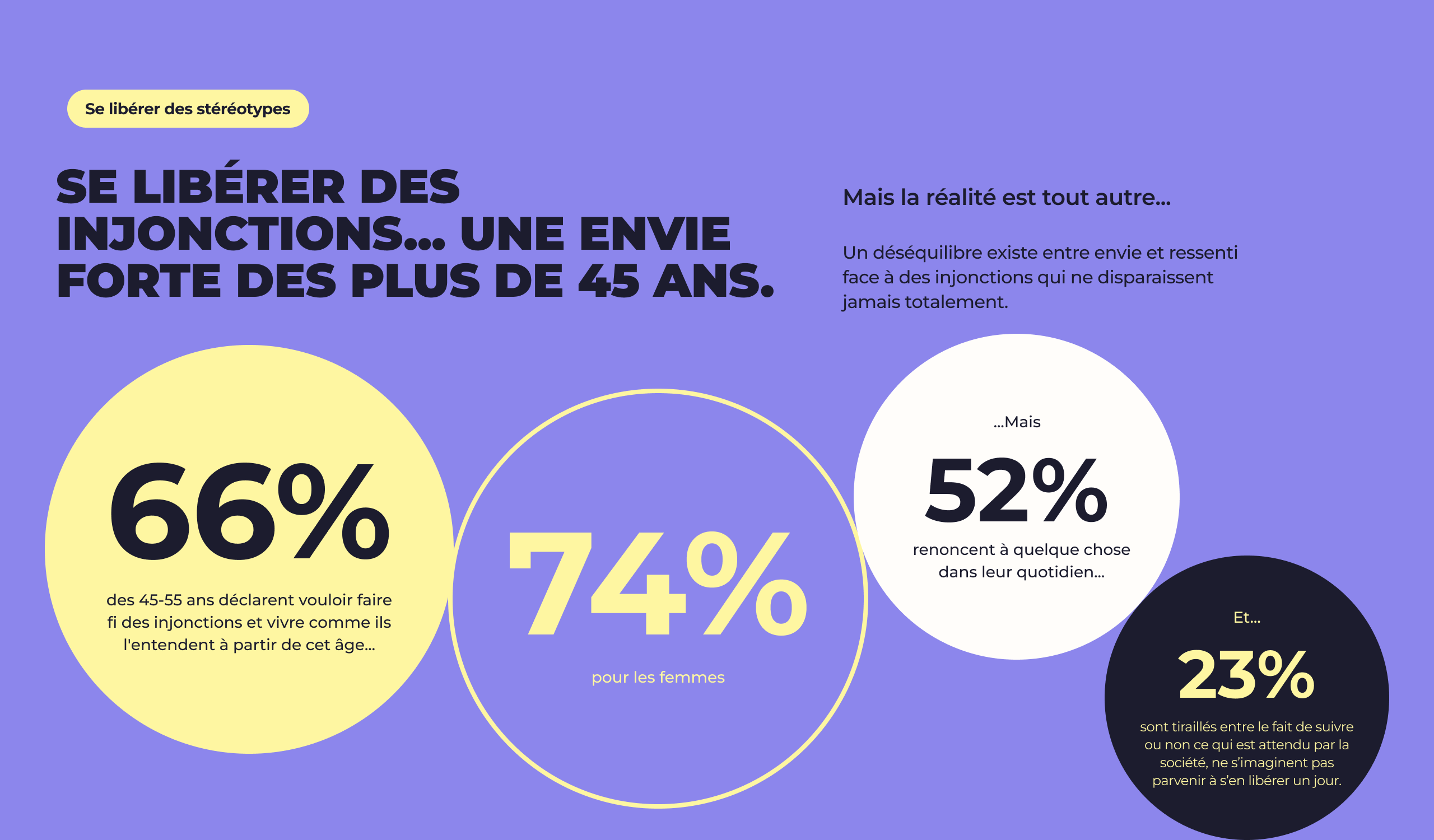
66% of people aged 45+ want to break free from societal pressures. However, this aspiration still clashes with reality:
55% continue to sacrifice certain aspects of their lives...
...And14% remain torn between their desires and social expectations.
Nevertheless...The desire for emancipation is there, but it still coexists with deeply ingrained norms.
The study also shows that ageing continues to be associated with recognized benefits: freedom, experience, and a broader perspective on life. These factors are key drivers for transforming the way French society views ageing.
Because it is time to put an end to societal pressure.
Because there is no single way to
« age well ».
Because age should no longer be a barrier to well-being and everyday life.
Because it is socially beneficial to change perceptions of age and promote an inclusive vision of well-ageing.
View the press kitA even more robust edition with a European outlook.
The 2026 European edition of the “Age & Society” Observatory by Laboratoires Expanscience / Ipsos BVA combines qualitative and quantitative methods.
The research therefore began with an exploratory phase of digital ethnography before moving on to the quantitative study.
For the latter, 10,000 European people (Belgium, France, Italy, Poland, Portugal, Romania, Spain, United Kingdom) aged 18 and over were surveyed to form a representative sample of the population, according to the following criteria: gender, age, occupation of the individual, region and category of settlement.
The study was conducted using a panel from 19 to 28 January 2026.
THE SCIENTIFIC APPROACH
Explore MIPAG's work and its integrated approach to Positive Ageing.
Discover MIPAG's work